


A Scandinavian cruise — the best way to see it all
Story and photos by Liz Biggs


I grew up thinking I was Irish. My grandfather’s family was from Galway and I inherited his last name. I wasn’t aware he married a Swedish girl, my beloved grandmother, Alice. Maiden names, like Pedersen, get forgotten after a few generations. Mostly, I remember her bright blue eyes and their retirement suntans (sunscreen hadn’t been invented yet). So, I was a bit surprised when my DNA test results showed I am 68% Scandinavian and only 6% Irish. Of course, the first thing I did was book a Scandinavian cruise — to fulfill my curiosity about where I come from and meet my people, lol.
Not gonna lie, I booked this trip blind — not really knowing if Scandinavia was a country (don’t laugh … or judge) or what countries it included. After a mediocre amount of research and an aggressive 15-day cruise to six countries and five capital cities — including daily port talks/tours with local guides — I saw and learned more than I could have ever imagined. I can’t possibly write about it all, but will try to hit the highlights.
Don’t ask me why I thought Scandinavia would be chock-full of blonde-haired, blue-eyed Thors and Barbies. That may have happened if Hitler won the war, but thankfully he didn’t. All the places we visited were full of beautiful, kind people from all over the world — a true melting pot. The Danish architect who gave me a tour of Oslo was from Serbia. Our fjord cruise boat captain who took us to Pulpit Rock was from New Zealand. But just like in America, not everybody gets along.
Our Norwegian tour guide admitted that the butt of every bad joke will be a Swede. And because Norway was under Danish rule for over 400 years, there is still some rivalry rooted in history. It doesn’t matter that the first king of Norway, Harald Fairhair (seriously, that’s his name), ruled from the year 872 to 930. He was a bad king — Sweden and Denmark are still mad about it.
Our cruise departed from Stockholm. We toured Gamla Stan, the old town, and I was surprised at how close you can get to the pointy-capped guards at the enormous Baroque palace. The Nobel Prize Museum is smack-dab in the middle of well-preserved 13th-century gabled merchant houses amid an array of architectural styles.
We took the tram to Royal Djurgården, a green island which has become a cultural hub. Skansen, the world’s oldest open-air museum; Gröna Lund, a historic amusement park; the Vasa and ABBA museums are all located there. Afterward, we had just enough time to walk up the mountainous steps from Slussen to Södermalm to the city overlook (how did we miss that famous Katarina Elevator — if only we knew how to read Swedish signs … or that it existed) and wander through some groovy neighborhoods.
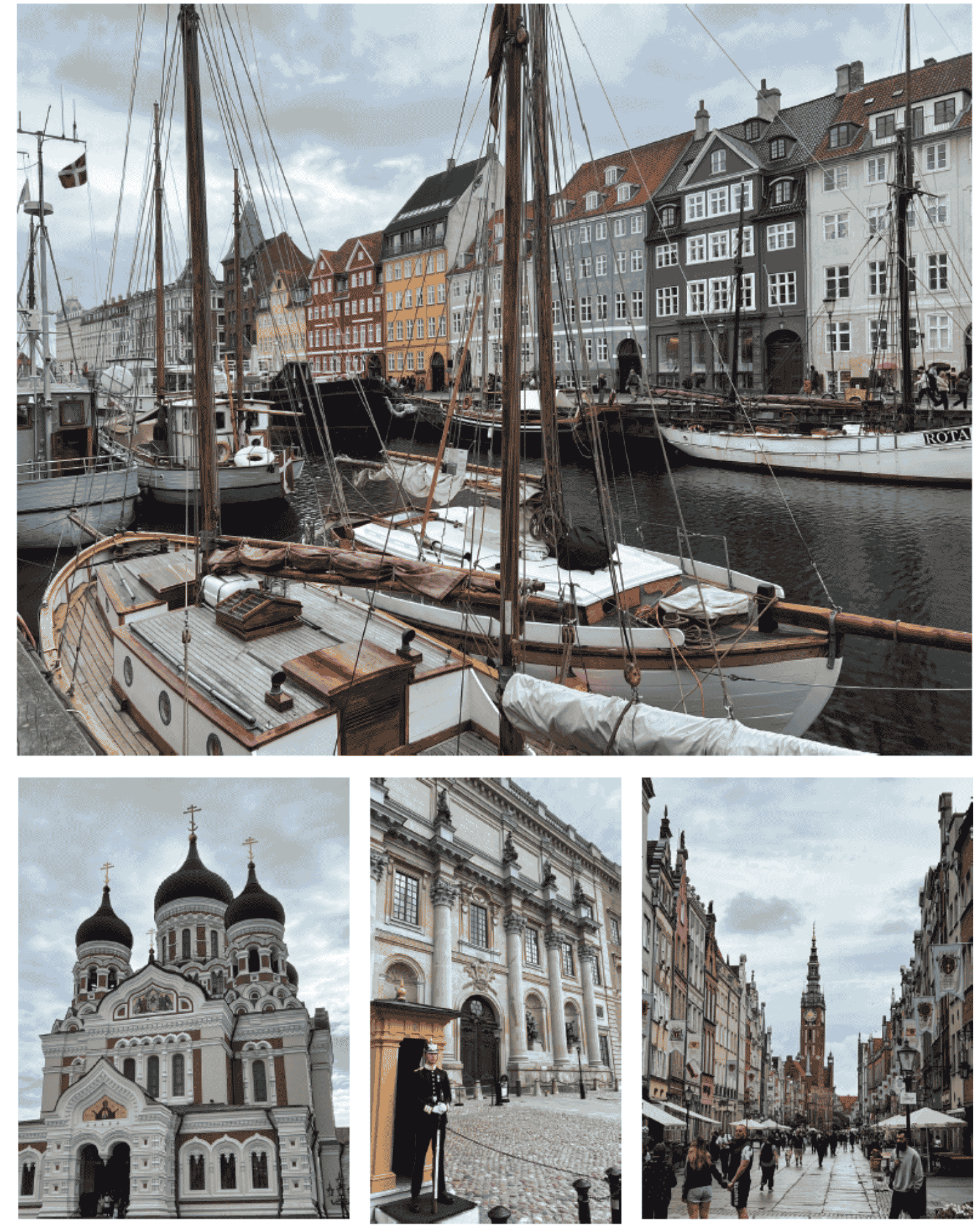
The next morning, we arrived in Tallinn, Estonia, located across the Gulf of Finland, south of Helsinki. If I’m being honest, I didn’t know this country existed. It borders Latvia and Russia — only 210 miles from St. Petersburg! That’s the closest to Russia I ever want to get, so cheers to checking that off the bottom of the bucket list. I have officially seen the Mikhail Preobrazhensky-designed Alexander Nevsky Cathedral with its 19th-century onion domes and colorful mosaic panels. But surprise, this walkable city was so laid-back and funky — full of art, sculptures, flowers and food markets. Highly recommend the Rotermann Quarter, Kalamaja and Telliskivi Creative City areas.
Our next stop was Gdansk, Poland. Did you know World War II started there? Our ship docked right next to the Westerplatte Monument, a war memorial marking one of the first battles in Germany’s invasion of Poland, which started the outbreak of World War II in Europe. Sobering to think about — so much beauty on this trip, and wine and food, yet so much to learn and take in. Gdansk is a quaint, picturesque city on the Baltic coast — rich with history, beautiful buildings and fountains. We enjoyed walking along the riverfront and happened upon a fun flea market.
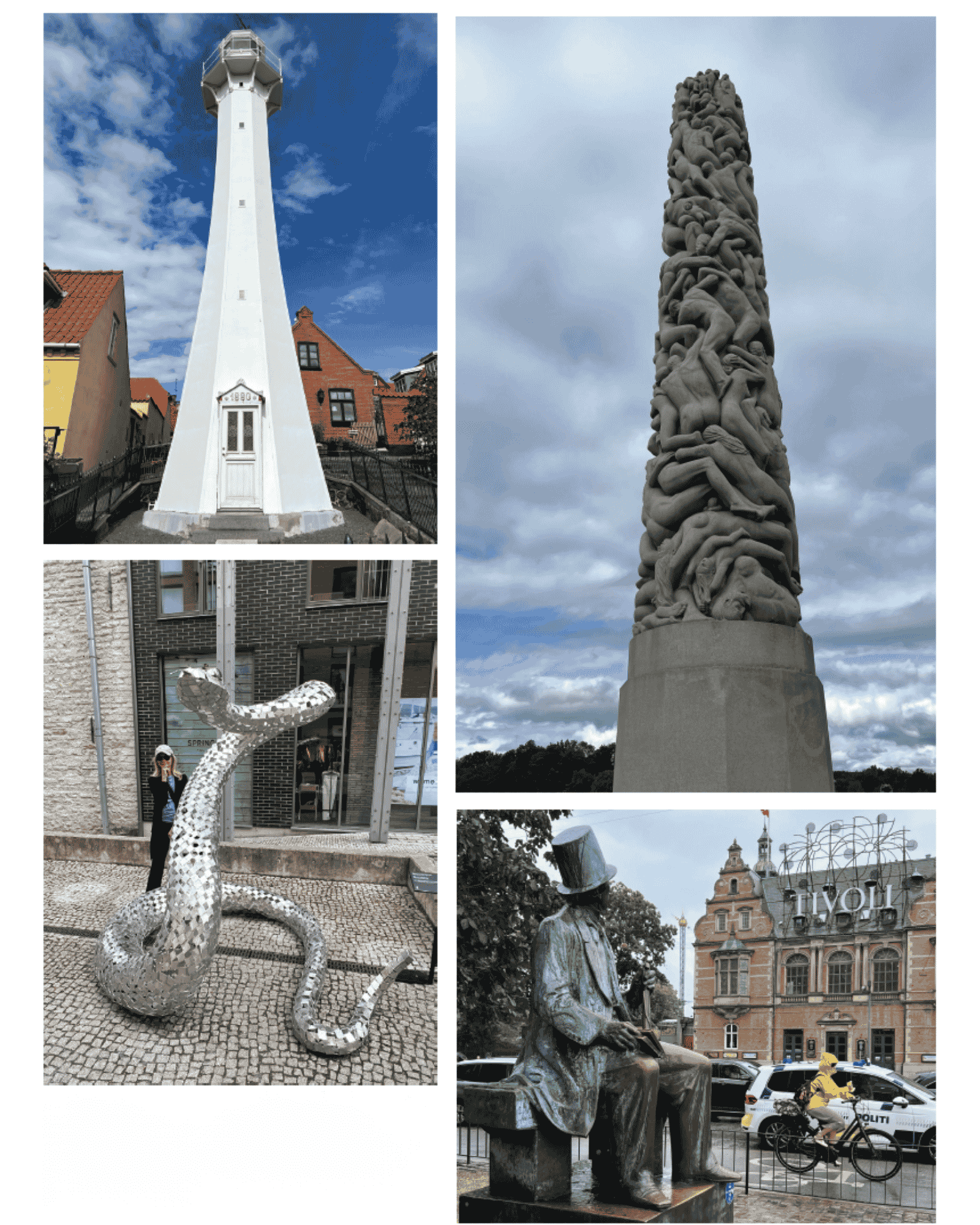
From Poland, we cruised to the Danish island of Bornholm. Founded as a fishing village in the year 1000, Bornholm is known for its half-timbered houses, historic cobblestone lanes, lighthouse, windmills and marina. And for its dramatic granite coastal cliffs — stones left behind by glaciers. I loved all the rocks. I only bought 5 things the whole trip — three keychains (for my collection) and two magnets. But I have a favorite rock from every place.
Berlin, Germany, was our next stop and was the most memorable day of the trip. The sky was gloomy and gray as we arrived at the Berlin Wall Monument — the Topography of Terror Documentation Center — a powerful indoor and outdoor history museum built directly on the former command site of Nazi secret police and Gestapo headquarters, where the atrocities of the Holocaust were planned and coordinated. A long, original segment of the wall still stands. It’s hard for me to believe that the reunification of Germany occurred on Oct. 3, 1990, four months after my wedding. By 1989, 136 people were shot down by border guards for trying to flee. I don’t remember paying much attention to world events during my carefree youth, but ignorance is no longer bliss.
Our guide also took us to the Book Burning Memorial at Bebelplatz, near Humboldt University, where the Nazis burned over 20,000 books deemed “un-German” in 1933. They burned all of Albert Einstein’s books! A nearby bronze plaque is inscribed with a chilling line from Heinrich Heine’s 1820 play, “That was only a prelude; where they burn books, they end up burning people.”
The clouds lifted, the sun came out and the sky turned a beautiful cerulean blue as our guide set us free to explore the spectacular city of Berlin. We walked along the banks of the Spree River to Monbijoupark, then across the bridge to Museum Island. We admired Prussian architecture like the Altes Museum, a masterwork of Neoclassicism, as well as the Brandenburg Gate, Berlin’s monumental gateway, completed in 1791.
We marveled at the French Cathedral, the Schiller Monument and the glass-domed Reichstag parliament building. I was awestruck by the juxtaposition of the new, modern architecture adjacent to the ancient buildings. Berlin has been reunified and undergone a remarkable rebirth as a center of art, culture and architecture.
After walking 12 miles in Berlin, we woke up the next morning in Copenhagen and walked 16 more. Maybe someday I’ll use the efficient public transit systems, but I slept so well on the ship that I was happy to walk from the Little Mermaid to Tivoli Gardens — mostly because I love to see everything in between.
Copenhagen really is as charming as a fairy tale — palaces and squares, beautiful statues, canals and the picturesque Nyhavn. The people were kind, too — I ducked in from the rain and asked the City Hall guard where to find the Hans Christian Andersen statue — he laughed so hard and pointed right behind me.
Don’t miss the Royal Library in Copenhagen, founded in 1648. The famous extension, known as the Black Diamond, was completed in 1999 using polished black granite from Zimbabwe. A dramatic central atrium with massive glass windows mirrors the harbor, connecting the modern wing to the historic 1906 library building. I had no idea it was a library; I just thought the modern building was cool. We entered in the modern part and exited through a royal back door into the Christiansborg Palace courtyard (which was a very convenient surprise, since I got us lost looking for that palace — I blamed my phone’s dead battery).
Copenhagen taught me a life lesson: Just go into that massive waterfront black granite building to ride those cool escalators — your journey may take you through a large, ancient Nordic library and spit you out in a palace courtyard. Also, buy tickets to the amazing Designmuseum in advance if you love chairs.
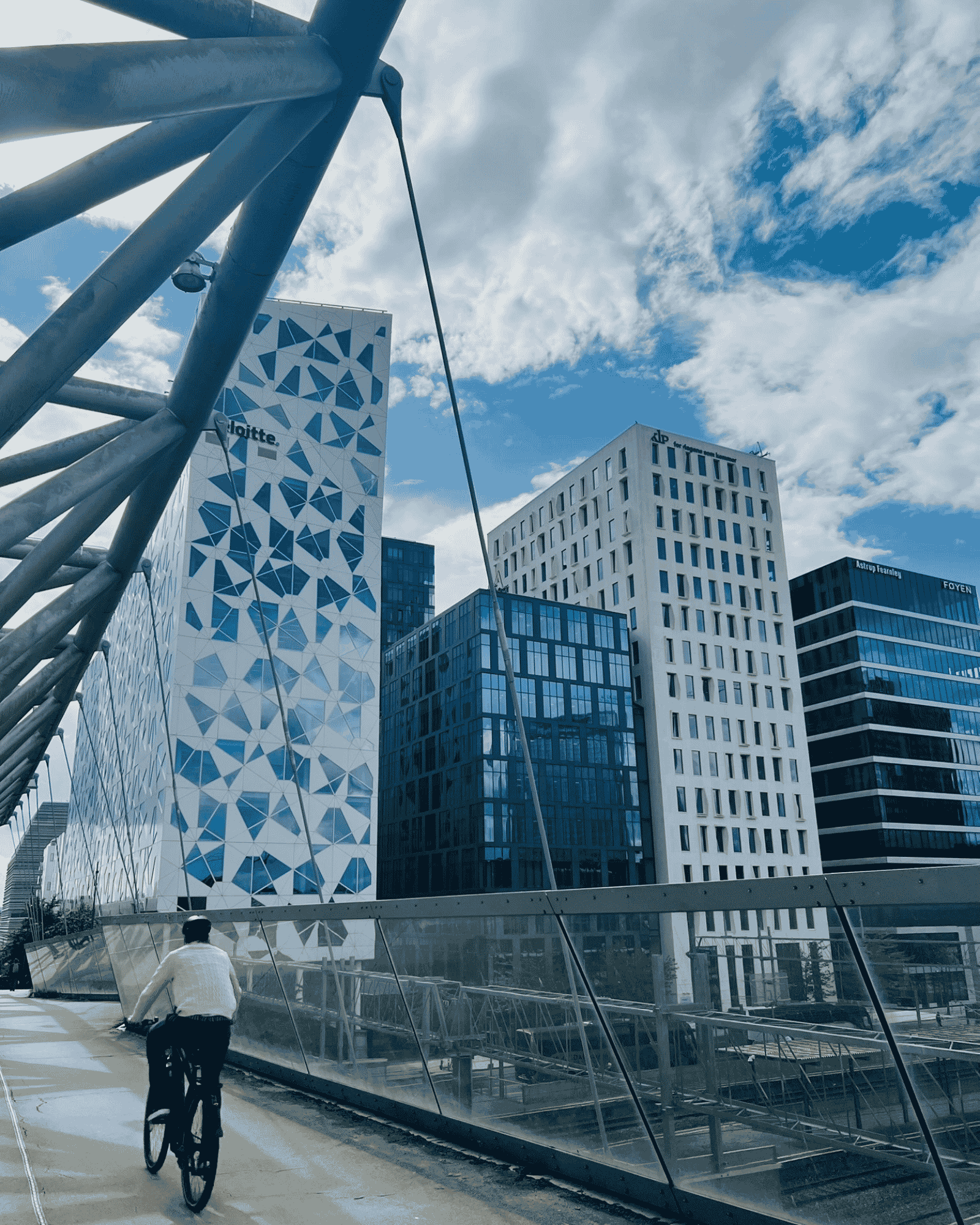
Saving the best for last, the crescendo of the trip was Norway — quite possibly the most beautiful place in the world. Our ship docked in Oslo, next to the iconic Opera House. It’s a striking view, like the Sydney Opera House, but you can walk right into and on top of this one (for free!). The Deichman Bibliotek, Oslo’s public library, is next door and is a place of wonder — spectacular architecture, views of the city, marvelous chairs and people-watching.
I took a five-hour architectural tour and learned so much. From wooden houses built in 1150 to the Akershus fortress with cannons and ancient bricks to the 12 mind-blowing modern skyscrapers that make up Oslo’s Barcode Project, I am still in awe. City Hall isn’t that impressive from the outside but so worth the wait in line. The art and murals inside are magnificent!
Thankfully, we had two days in Oslo because one is not enough. The sculptures in Frogner Park are fantastic, and while you’re up there, go to the city overlook bridge depicted in Munch’s “The Scream.” There’s a mind-boggling man-made Olympic ski jump up there too, but it’s a hike.
After Oslo, we cruised to Stavanger and Eidfjord to explore the fjords — a boat to Pulpit Rock one day and the scenic Flåm Railway the next. The views and waterfalls are breathtaking. Our last stop was Bergen, a delightful city to explore — the quaint half-timbered warehouses along Bryggen wharf, but especially the goats and troll woods.
Take the funicular up to Mount Fløyen for a magnificent view of the city. Random goats walk around up there, and unlike the alpacas in Peru or the camels in Tangier, these animals are sweet and like to be petted. Head into a dark, leafy forest and hike back down to the cobblestone city center.
Recently, a friend said she doesn’t like cruises — she’d rather stay in hotels and rent cars to explore. Yeah, I felt that way in my 20s. But if you are curious like me, a cruise is a highly efficient way to see the world. Maybe my Viking ancestry compels me to “conquer” every city I visit — see everything there is to see and learn from my travels. The Irish in me must like to unpack once, relax in the spa every evening before dinner, upgrade the beverage package and sleep like a baby while the ship sails.
Our ship had a giant bubbly hot tub, a snow room (burying tired feet in the snow is pretty amazing), a steam room, a cold plunge pool and a sauna. We did them in that order almost every night — I could only stay in the cold plunge pool for 12 seconds, but it felt great after. We were regulars at the set-sail happy hour on the front deck, followed by dinner in one of the fantastic restaurants while watching the sunset over the sea.
Who knew our ship had a planetarium and a guest speaker from NASA — that was a fun surprise. Instead of musical shows, I opted to learn about space. But there is something for everyone on a cruise ship — or you can just go to sleep after the sun sets at 10 p.m. A journey through Scandinavia offers a magical blend of modern, design-forward capitals and raw, ancient natural wonders — definitely worth the trip!

